How to Choose a Blood Pressure Monitor for Home Use
Upper arm or wrist, cuff sizing, memory storage and app sync — the features that actually change how often you use a home blood pressure monitor, and the ones that do not.
A home blood pressure monitor is only useful if you use it consistently. The readings a clinician cares about are not one dramatic number but a pattern across days and weeks, so the best monitor for you is the one that is quick, comfortable and easy to record. That usually comes down to four decisions: placement, cuff fit, memory, and whether you want your readings in an app.
Upper arm versus wrist
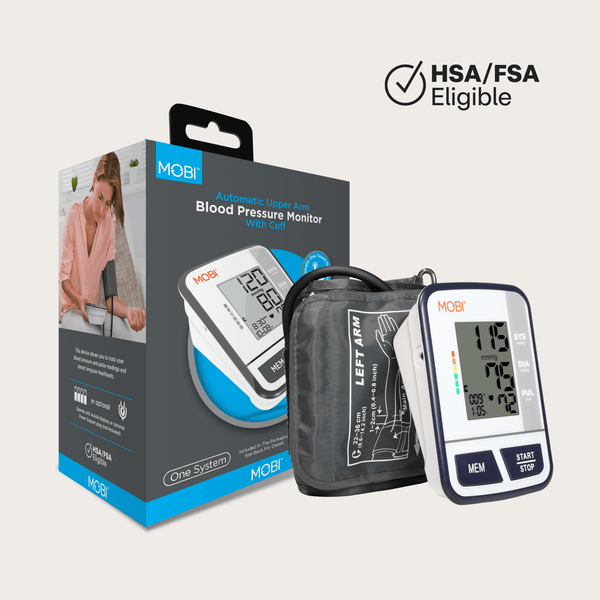
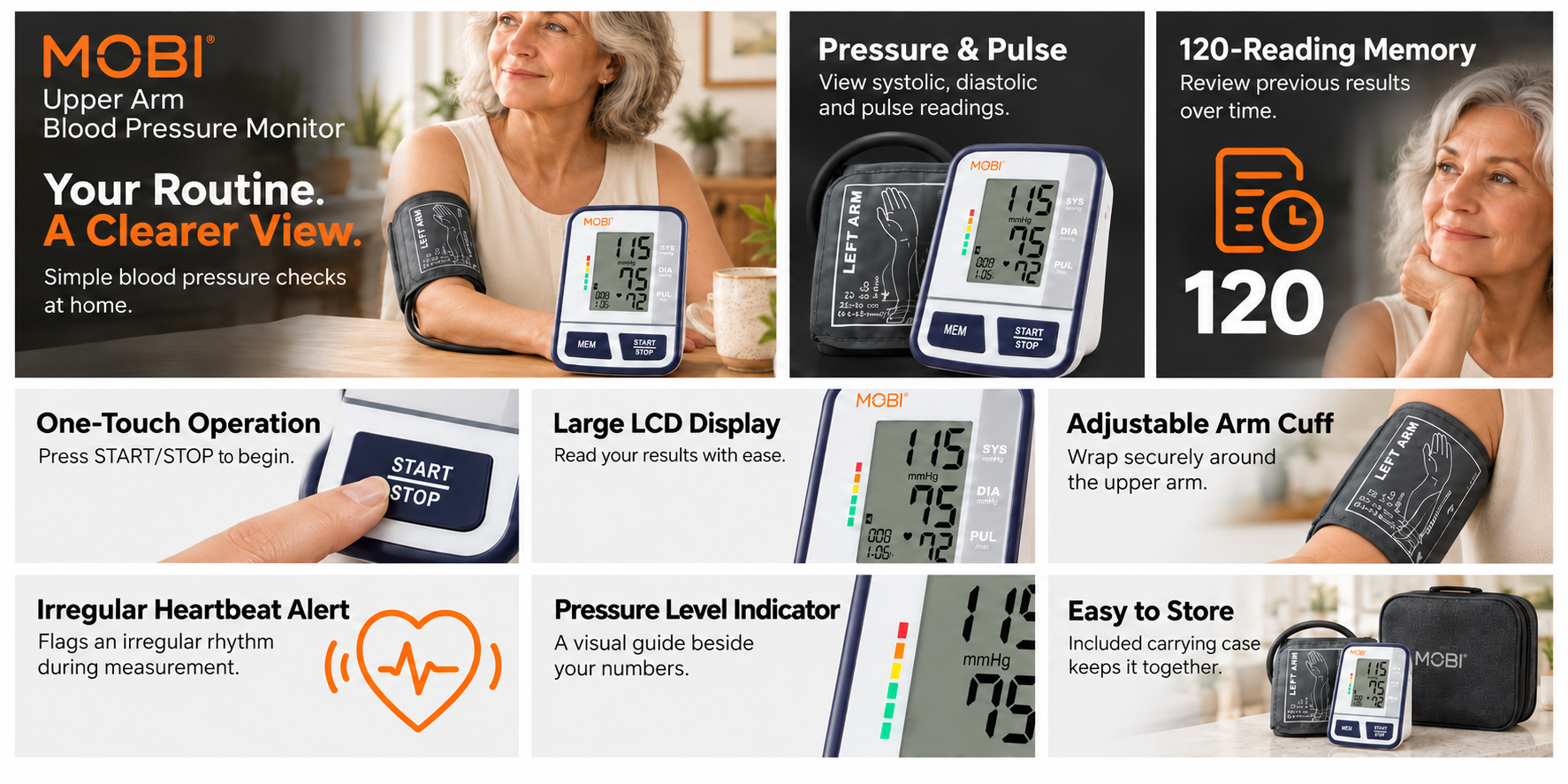
Upper-arm monitors are the reference standard for home measurement. The cuff sits at heart level, which removes most of the positioning error that comes from measuring at the wrist. If you have a choice and no physical reason to avoid an arm cuff, start here — the MOBI Upper Arm Blood Pressure Monitor stores 120 readings and uses a comfortable adjustable cuff.
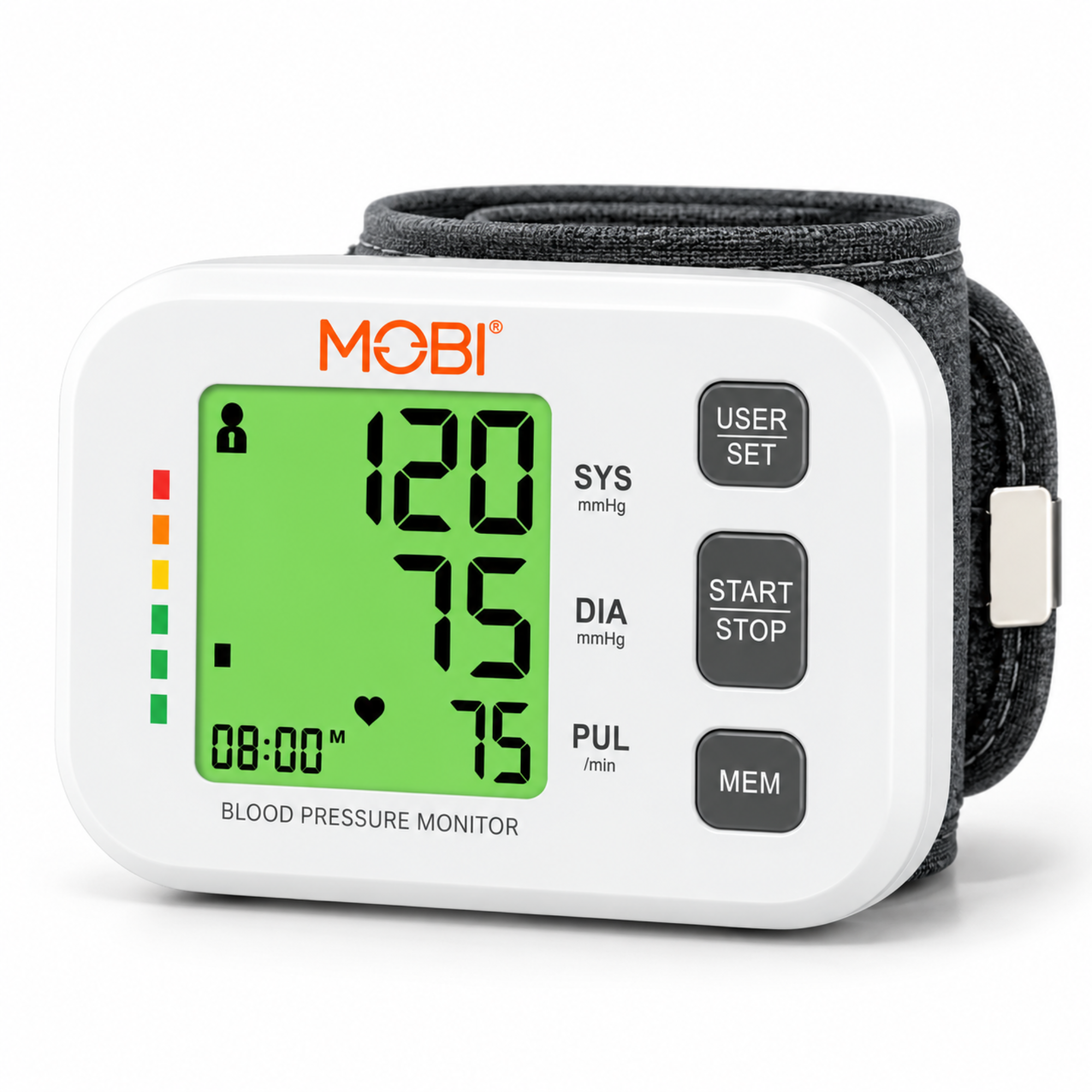
Wrist monitors are genuinely convenient: no sleeves to roll up, no table needed, and they travel well. The trade-off is technique. Your wrist must rest at heart level, supported, with the palm facing up. Done correctly, a wrist monitor gives usable readings; done while your arm hangs at your side, it will read high. If you buy a wrist model such as the MOBI Wrist Blood Pressure Monitor, plan to learn the posture once and repeat it every time.
Fit the cuff before anything else
An undersized cuff is the single most common cause of a falsely high reading at home. Measure the circumference of your upper arm midway between shoulder and elbow, then check that number against the range printed on the cuff. Most adult cuffs cover roughly 8.5 to 16.5 inches, but ranges vary by model and a wrist cuff is sized to the wrist instead. If you are between sizes, choose the larger cuff.
Memory, users and sharing
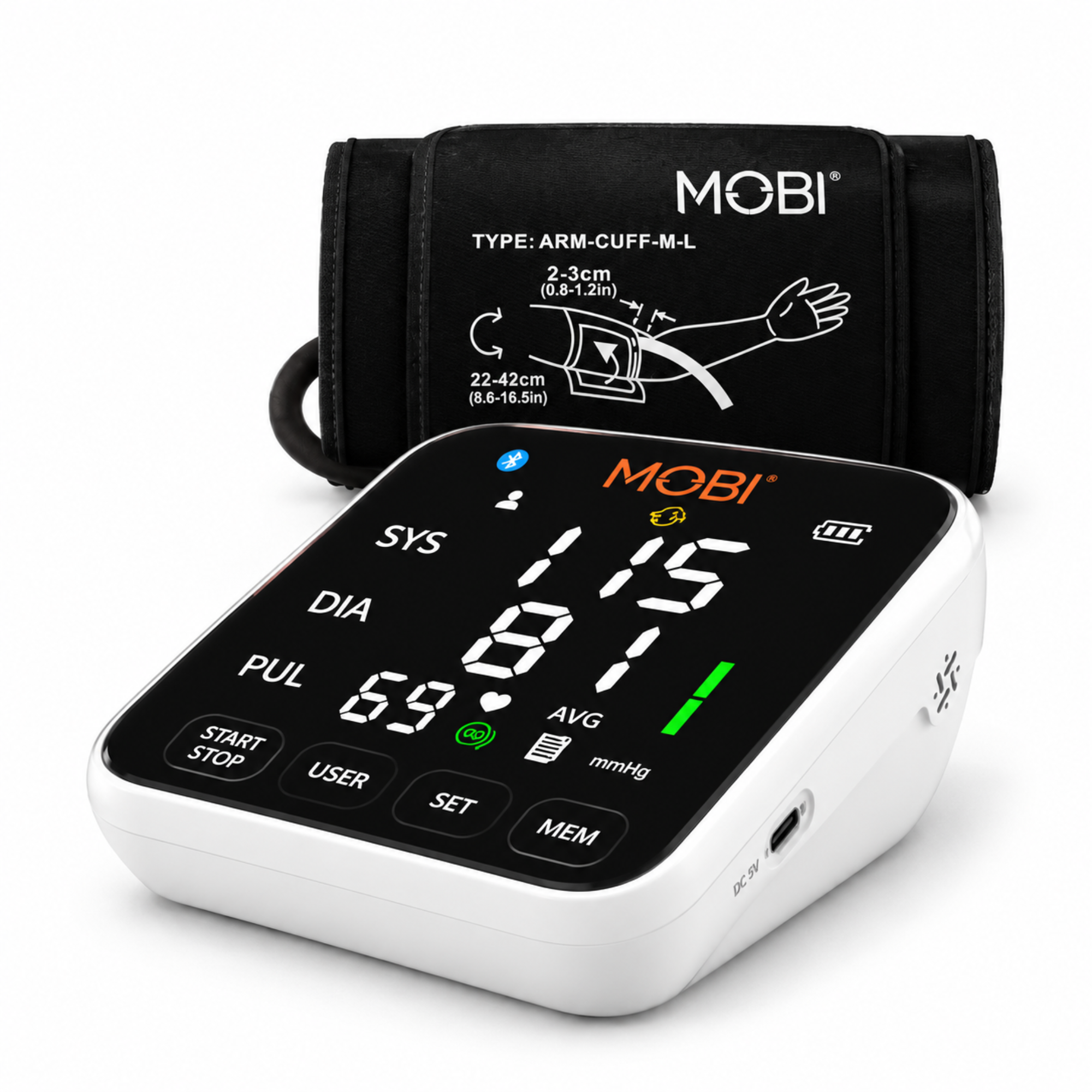
Two-user memory matters in households where both partners track pressure. A monitor that stores 60 readings per user lets you review a fortnight without writing anything down. If you regularly share results with a clinician or an adult child acting as caregiver, Bluetooth models are worth the extra cost: the MOBI Smart Bluetooth Arm Blood Pressure Monitor syncs every reading to the app, where history is charted and easy to export.
Taking a reading that means something
Sit still for five minutes first. Keep feet flat, back supported, arm resting at heart level, and avoid caffeine, exercise and smoking for 30 minutes beforehand. Take two readings a minute apart and note the second. Measure at roughly the same times each day — morning before medication and evening before dinner are common choices — and bring the log to appointments rather than trying to remember numbers.
When to call a clinician
Home monitoring is for tracking, not diagnosing. Contact a clinician promptly for readings consistently at or above 180/120, for chest pain, shortness of breath, weakness or vision changes, or if your numbers are rising steadily despite your current plan. A monitor is a tool for a conversation with a professional, not a replacement for one.