Nightlights and Baby Sleep: Choosing Light That Helps, Not Hurts
A little light makes night feeds possible and helps toddlers feel safe. Too much, or the wrong color, works against sleep. What the research and real routines suggest.
Nightlights are one of those purchases that seem trivial until you are navigating a nursery at 3 a.m. with a baby in one arm and no free hand for a lamp. Then they become essential infrastructure.
The question is not whether to have one. It is how much light, of what color, in what position, and whether it stays on all night.
Why light timing matters more than light amount
Sleep is regulated in part by melatonin, which the body produces in darkness. Bright light, especially blue-rich light, suppresses melatonin production. That is why a phone screen at midnight feels different from a candle.
For a newborn, the melatonin system is still developing and day-night rhythms take weeks to establish. For an older baby and for toddlers, light exposure in the hour before bed genuinely affects how quickly they settle.
The practical takeaway: the light you use for a nappy change should be dim, warm, and brief. The light left on all night, if any, should be dim and low to the floor.
Warm versus cool light
Warm light, in the amber and orange range, has very little blue content and is the safer choice near sleep. Cool white and blue-rich light is alerting. A bright white nightlight that stays on all night in a nursery is the wrong tool, even though it looks clean and modern on a shelf.
If you can only control one thing, control this: warm, low, and out of the child's direct line of sight.
Position beats brightness
A light at eye level across from the crib is far more disruptive than a brighter light near the floor behind a chair. Two reasons: direct visibility to the child, and the way a light source in the field of view affects how dark the room feels.
Best positions, in order: low on the wall near the door, near the floor along the path you walk, or in the hallway with the door cracked. Worst: on a shelf at cot height, or clipped to the crib itself.
The sensor question
A plug-in nightlight with an automatic light sensor solves a problem nobody talks about: the light being on at 6 p.m. in summer, when the room is still bright and no one needs it, and being off at the wrong time because someone switched it.
A light sensor turns the unit on when the room darkens and off again when daylight returns. There is nothing to remember, nothing to charge, no app to open, and nothing for a toddler to unplug out of curiosity. For a hallway, a nursery, or a child's room, that simplicity is genuinely the right engineering.
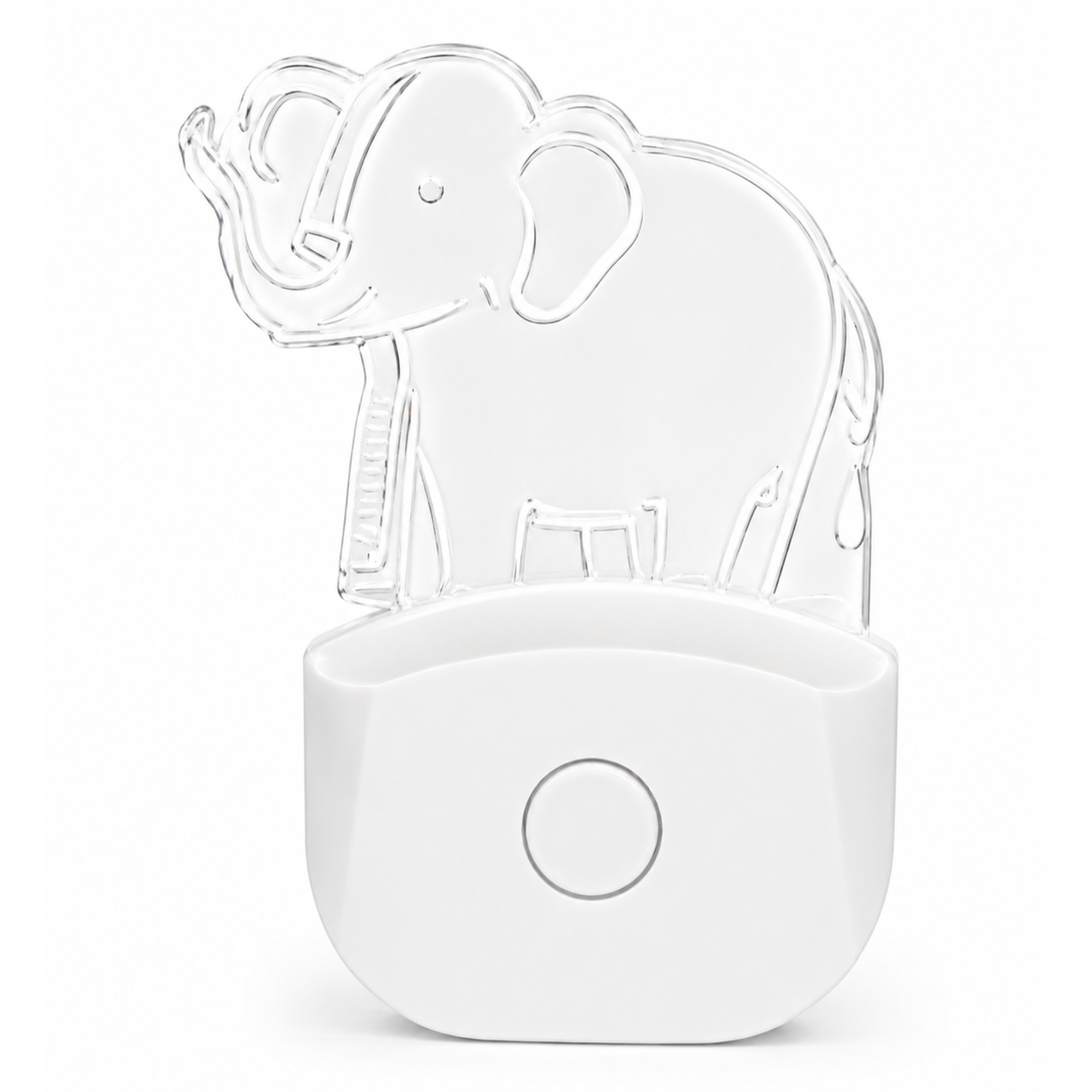
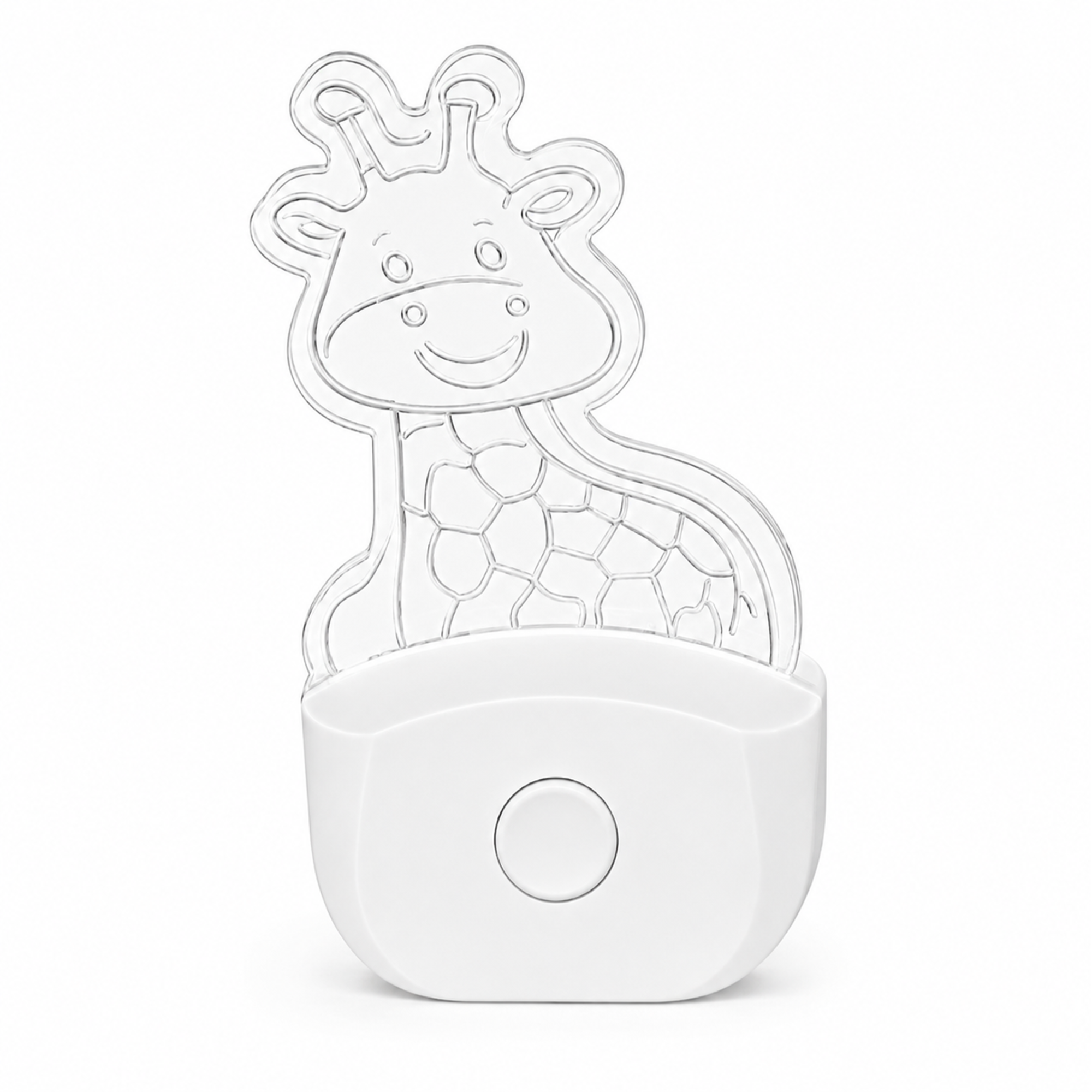
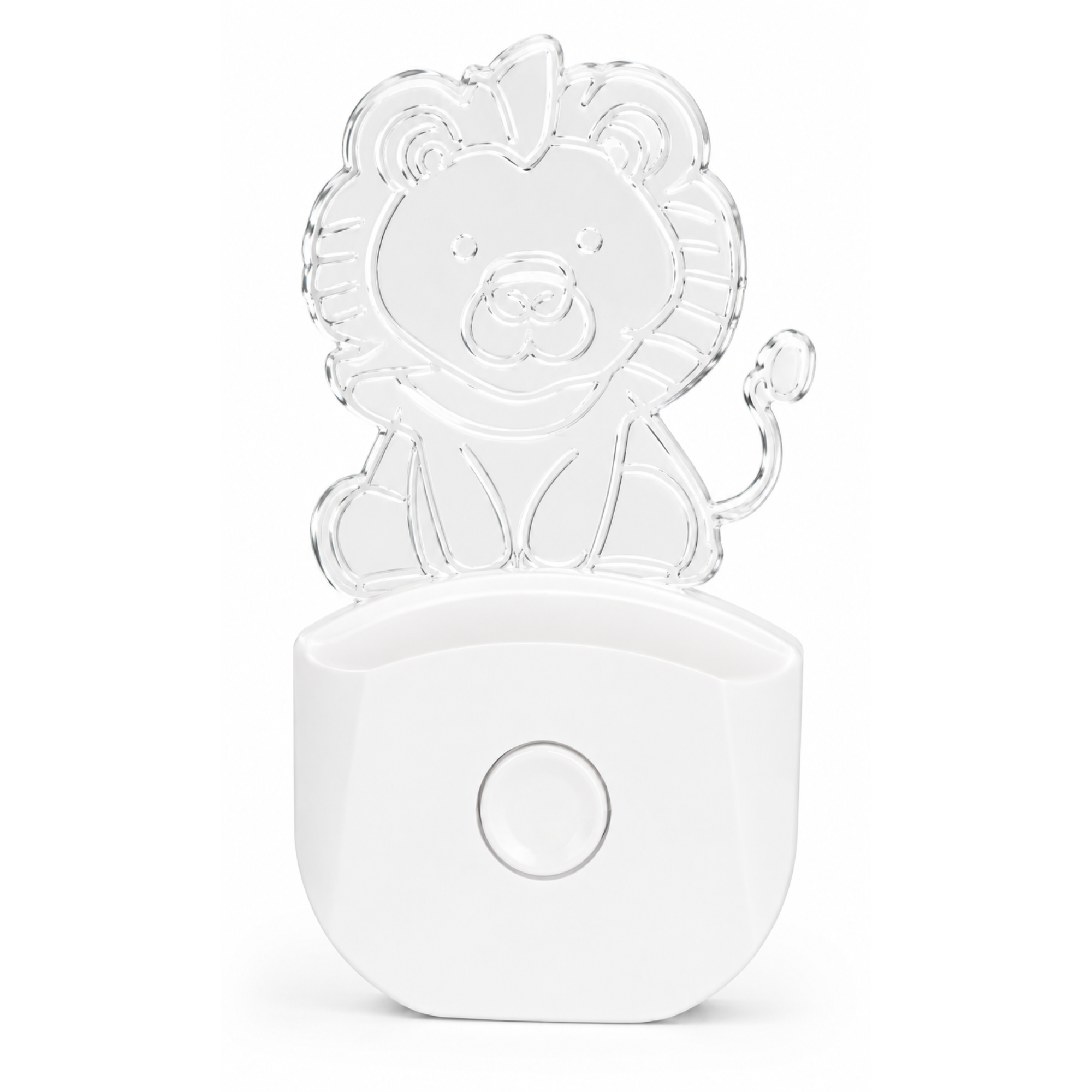
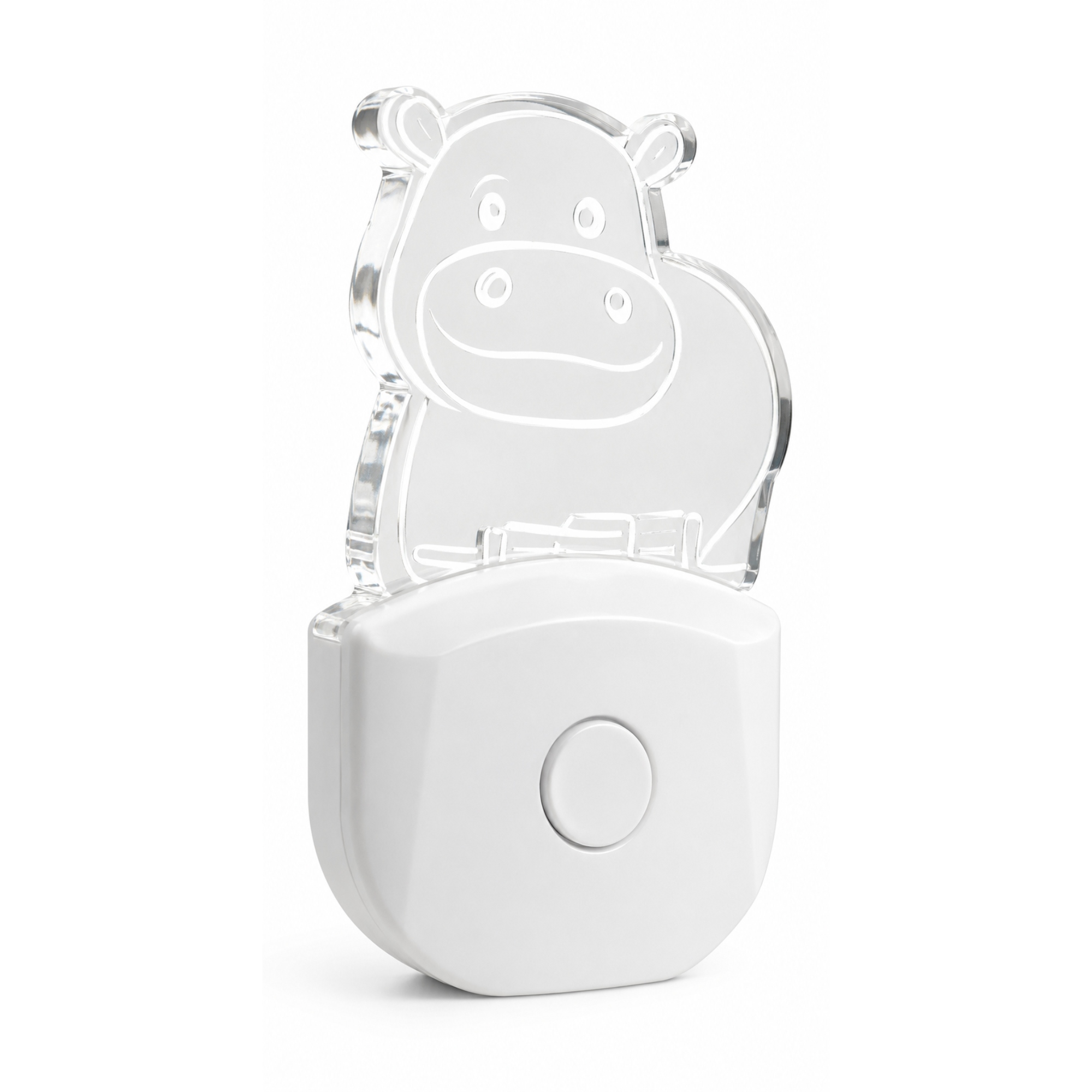
The MOBI WallMate nightlights work this way: a plug-in base with a clear animal silhouette on top that glows softly once the room goes dark. Elephant, giraffe, lion, and hippo, if you are building a set for siblings. They draw very little power, and because they occupy a wall outlet rather than a shelf, there is no cable for anyone to pull.
When a nightlight helps a toddler
From around age two, fear of the dark becomes common and entirely normal. A child who can see a familiar shape in the room settles faster than one in total darkness, and the difference between a 20-minute bedtime and a 90-minute one can come down to that glow.
At this age the design matters as much as the light. A recognizable animal reads as friendly rather than as a shadow. That is the whole reason these silhouettes sell: a two-year-old will accept an elephant. They will not accept "ambient illumination."
When it works against you
If a child is waking more with the light than without it, the light is the problem. Common causes: it is too bright, it is in their line of sight, it is cool white, or it has become a toy they can switch on and off at will.
Try a week without it. If sleep improves, keep the hallway light instead. If sleep gets worse because of fear, bring it back at a lower position.
The rest of the night-time setup
- Keep the room dark for overnight sleep, with the nightlight low and unobtrusive.
- Use warm, dim light for feeds and changes, and turn it off when you leave.
- Avoid overhead lights during night wakings. They reset the room.
- Keep the room cool, and keep the crib clear of pillows, blankets, and soft toys.
- Get daylight into the room in the morning. That contrast is what builds a rhythm.
Babies should always sleep on their back on a firm, flat surface, with nothing in the crib. A nightlight plugged into a wall outlet, well away from the crib, does not change that.
A small purchase with an outsized effect
A nightlight is one of the cheapest things you will buy for a nursery and one of the most used. Choose warm light, low placement, automatic on and off, and a shape a child likes. Then forget about it, which is exactly what a good nightlight allows you to do.
This article is general information, not medical advice. Ask your pediatrician about safe sleep practices and any sleep concerns.
Devices mentioned in this article

Keep reading
How to Clear a Baby's Stuffy Nose Without a Fight
Babies cannot blow their noses, and congestion at night is miserable for everyone. A calm, step-by-step routine using saline, suction, and timing that actually works.
Read articleLooking in Your Child's Ear at Home: What You Can and Can't Tell
A phone-connected otoscope lets you see inside an ear. It does not let you diagnose an infection. How to use one well, and when a picture is actually useful.
Read articleBuilding a Caregiver Alert Setup Your Parent Will Actually Wear
Medical alert systems fail for one reason: the button stays in a drawer. How to choose placement, who receives the alert, and what to test before you rely on it.
Read articleComparing models? See the full MOBI catalog side by side.
Compare products