What Your Pulse Oximeter Reading Actually Means
A pulse oximeter gives you two numbers in eight seconds. Here is what SpO2 and pulse rate can tell you, what they cannot, and the three things that make a reading wrong.
A fingertip pulse oximeter is the closest thing to a vital sign check you can do at your own kitchen table. Clip it on, wait a few seconds, and you get a percentage for blood oxygen and a number for pulse. It is genuinely useful equipment. It is also the device most likely to cause unnecessary panic, because a number that looks alarming is often just a cold finger.
Here is what the two figures mean, when to trust them, and what to do with the information.
The two numbers on the screen
SpO2 is the estimated percentage of your hemoglobin that is carrying oxygen. Hemoglobin is the protein in red blood cells that ferries oxygen from your lungs to the rest of you. A healthy resting reading for most adults at sea level sits between 95 and 100 percent.
Pulse rate, or PR, is your heart rate in beats per minute, measured from the same pulsing blood flow the sensor is watching. A typical resting adult rate is somewhere in the 60s to about 100, and trained athletes often sit lower.
The device works by shining red and infrared light through your fingertip and measuring how much of each wavelength is absorbed. Oxygen-rich and oxygen-poor blood absorb those wavelengths differently, so the ratio tells the sensor roughly what fraction of your hemoglobin is loaded up.
That word "roughly" is doing real work in the previous sentence. This is an estimate built from a light signal, not a blood draw.
What makes a reading falsely low
Three things cause most of the bad readings we hear about, and none of them is a lung problem.
Cold hands. When you are cold, blood vessels in your fingers constrict and flow drops. The sensor needs a strong, regular pulse of blood to calculate. Poor flow means a poor calculation. Warm your hands under running water for a minute and try again.
Nail polish, especially dark polish or gel, blocks light. So does a very thick or artificial nail. If you cannot go without, try a different finger or turn the sensor sideways on the finger.
Movement. A shaking hand or a wiggling child creates a signal the sensor cannot separate from your pulse. Rest the hand flat on a table and hold still for the full reading.
Two more things worth knowing: a reading should stabilize within about ten to thirty seconds. If the number is still jumping around after a minute, the reading is not ready, no matter what is displayed.
When a number is worth acting on
For most adults, a resting SpO2 of 95 percent or above is unremarkable. Between 90 and 94 percent is worth a repeat after warming up and resting. Below 90 percent, measured properly and repeated, is a reason to contact a clinician rather than wait.
But the percentage is only part of the picture. Symptoms matter more than any single number. If someone is short of breath, confused, blue around the lips, or struggling to speak in full sentences, that is a medical situation regardless of what the oximeter says. If someone feels fine and the oximeter reads 91, warm the hands, recheck, and watch for other signs.
A pulse oximeter cannot tell you why oxygen is low. It can only tell you that the reading is low, and only when the reading is taken properly.
The trend is the point
A single reading at one moment tells you very little, because oxygen saturation moves a bit with position, activity, altitude, and even how deeply you just breathed. What is genuinely informative is a run of readings taken the same way, at the same time of day.
This is where a monitor with memory earns its keep. Without history, you are comparing today's number to a feeling. With history, you can see that a reading dropped from 97 to 94 over three days, which is a pattern a clinician can use.
For anyone managing a chronic respiratory condition, recovering at home, or monitoring an older relative, a written or app-tracked record is more useful than any one measurement.
Pulse rate, read alongside it
The heart rate number is often ignored, and it probably should not be. A resting pulse in the 50s with a normal saturation is common in fit people. A resting pulse of 110 on the same screen, taken at rest, is worth a conversation even if the oxygen number looks perfect.
The pair together tells a small story: is the heart working harder to move the same oxygen? That is exactly the kind of question a doctor asks, and having both numbers logged helps answer it.
Using one with a child, or with cold hands in winter
Children's fingers are small, and the light path through a child's fingertip is thin. Use the smallest sensor you have, keep the hand still, and treat a wobbly reading as unreadable rather than alarming. For infants, a fingertip oximeter is not a substitute for clinical assessment.
Winter is the season of false alarms. If your hands are cold enough to feel stiff, they are cold enough to distort a reading. Warm them first, every time. It removes the majority of the confusing results people bring to us.
Two MOBI options, and how to choose
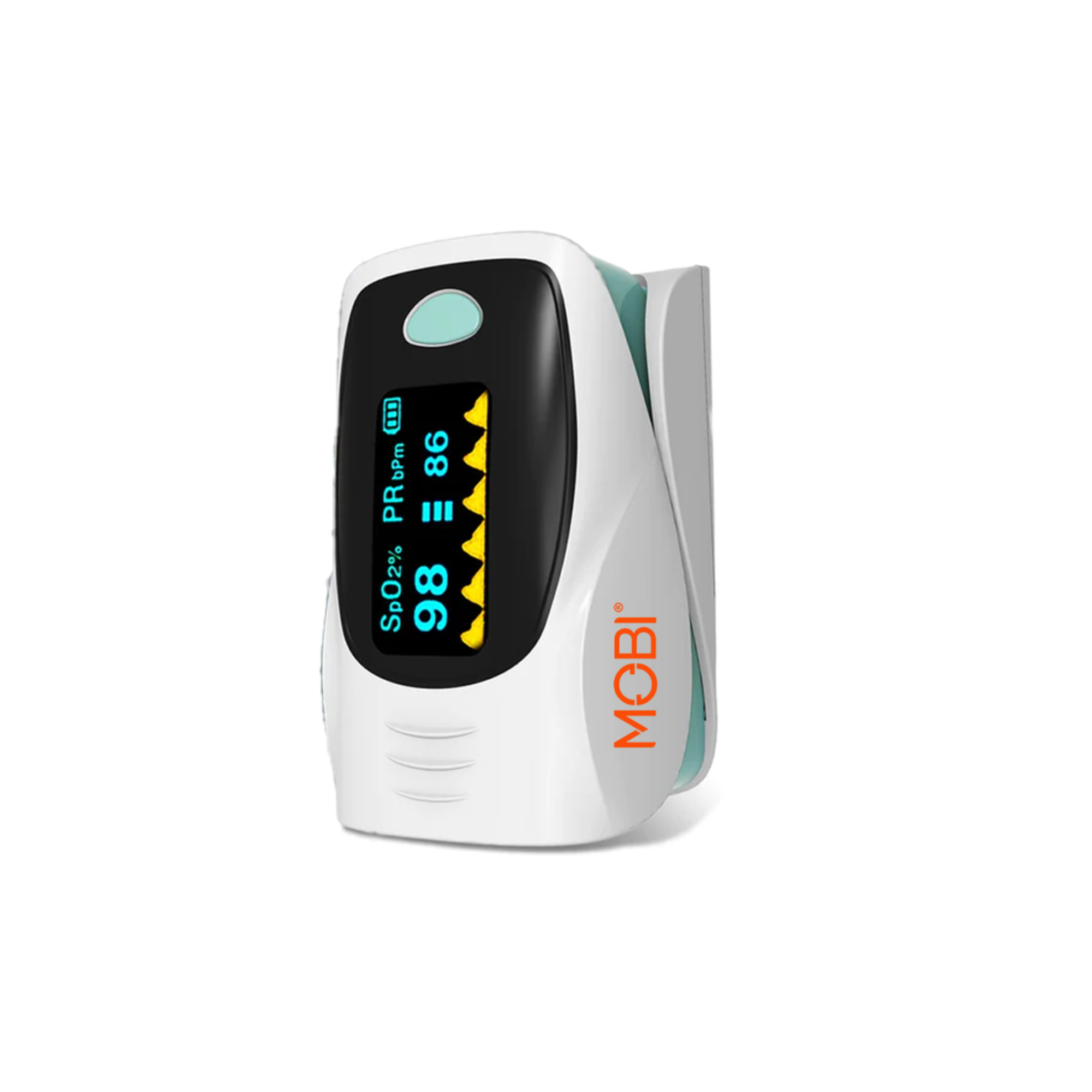
The Fingertip Pulse Oximeter with OLED Display is the uncomplicated version: SpO2 and pulse in seconds, a bright display that reads from several angles, one-button operation, auto power-off, and a low battery indicator. It goes in a drawer or a travel bag and does its job.
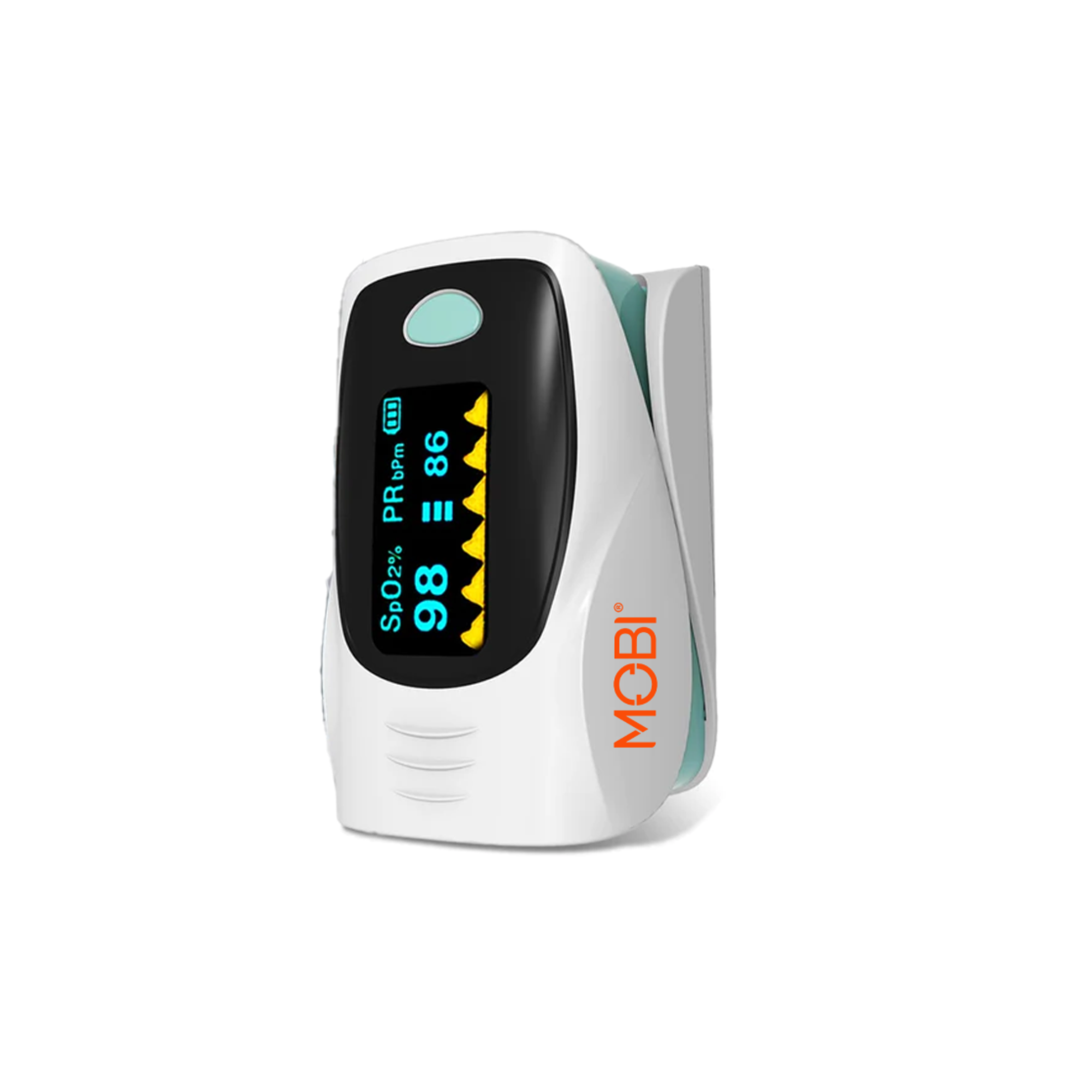
The Smart Fingertip Bluetooth Pulse Oximeter does the same measurement but logs each reading to the MOBI app over Bluetooth, which turns a spot check into a history. That is the version worth having if you are tracking a condition over weeks, sharing results with a caregiver, or checking in on a parent from a distance.
Both use two AAA batteries and both include a lanyard and case. The choice is really about whether you want a number or a record.
A short checklist before you trust a reading
- Warm your hands and remove dark nail polish from the finger you use.
- Rest the hand flat, palm up, and stay still for the whole measurement.
- Give it a full thirty seconds to settle.
- Read SpO2 and pulse rate together, not separately.
- Repeat an odd number once before reacting to it.
- Write readings down, or let the device store them, so a pattern can form.
This article is general information, not medical advice. If you are worried about your breathing or someone else's, contact a clinician or emergency services rather than relying on a device reading.
Devices mentioned in this article
Keep reading
Wrist vs. Upper Arm Blood Pressure Monitors: An Honest Comparison
A wrist cuff is easier to put on and an arm cuff is easier to trust. Here is how the two differ in real use, how to take a reading that counts, and who should pick which.
Read articleEar vs. Forehead Thermometers: Which Reading Should You Trust?
Both take a temperature in a second. They do not measure the same place. A practical guide to picking a method by age, situation and time of night.
Read articleThe Oral Thermometer Is Not Old-Fashioned. It Is Still the Baseline.
Under-the-tongue temperature is cheap, reliable and easy to repeat. Here is how to take an oral reading properly, and why a $5 thermometer still earns its place.
Read articleComparing models? See the full MOBI catalog side by side.
Compare products